
Programs Available

Masterclass
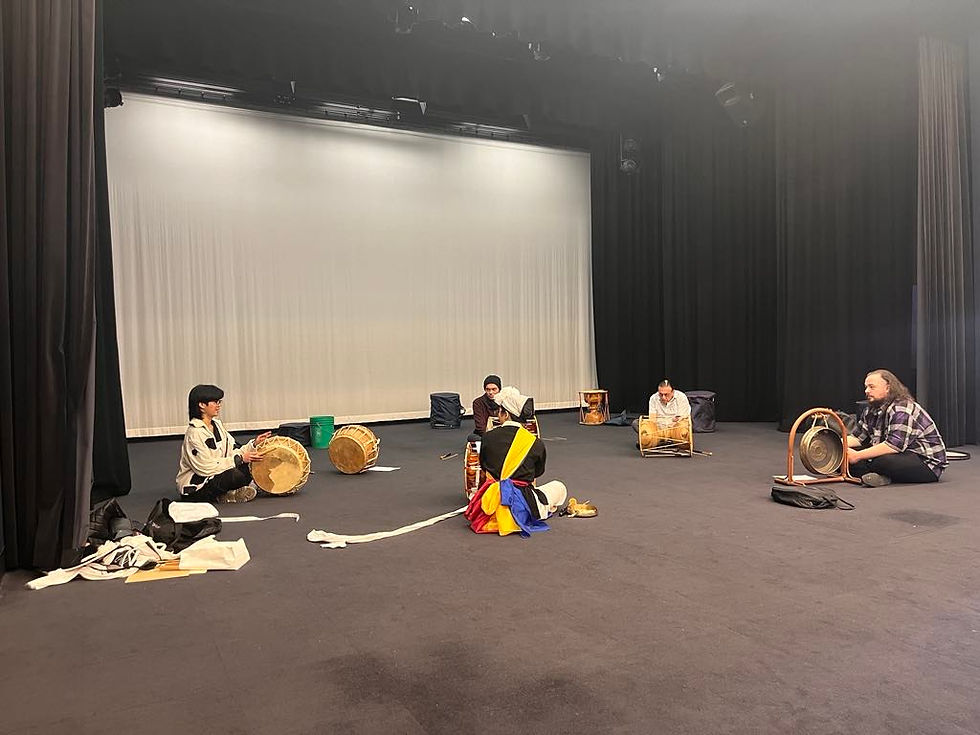
A scheduled, in-depth check up session (e.g. once per term) for students with prior experience and/or schools running Korean traditional drumming programs. It focuses on ensemble skills, technique refinement, and deeper musical understanding, while supporting teachers and enhancing ongoing programs.


Weekly Sunday Class
A collaboration with the local Korean Traditional drumming group FeelGood. A year-round program held on Sundays for anyone interested in Korean traditional music. No prior experience required and instruments can be provided. Perfect for HSC students looking to explore traditional instruments, families wanting a cultural experience together, or 2nd-generation Koreans curious to reconnect with their roots.
Hamilton - Sydney Return
Rhythm is the heart and soul of all music, reflecting the traditions and culture of any society. It is also the easiest path to understanding the music. Jangdan is the core of all our music and dance so let's explore below!
There are four main percussion instruments that hold together the jangdan - Kkwaenggwari, Jangu, Buk, Jing.
I want to focus on the percussion and Jangdan (장단 - our rhythm) aspect of our traditional arts alongside movement as percussion is a gentler and easy route to getting to know our music and natural easy flowing movement is the foundation of our music and dance. The movements we make to express the small joys of life (Heung) listening to music is what makes our music and dance special. Durae Nongak dance and music originated from play here. Jangdan is the core of our music.
couple of artforms as introduction
samulnori and its origin durae nongak
ㅇ입ㅊ추춤 --> 승무 because the backstory is fascinating and religious origins possibly.
민요 and 판소리
as well as pitched wind and string instruments like the Gayageum, Piri, Haegum and Daegum. These are used to perform for various occasions, including celebrations, funerals, work (labour work such as farming and also housework), and special ceremonies that may ask for blessings, such as more rain. Music, dance and play were deeply integrated into our daily lives, accompanying us from the first sounds we hear in our mother's womb to the funeral songs sung at the end of life. Music was not exclusive to royal palaces or the wealthy; villagers performed on the streets and at community events, reflecting its significance in all aspects of life and social classes. The reason this page focuses on dance as well is because music and dance is inseparable. Music was not performed seated like we would see in today's age. Instruments were attached to the body with pieces of cloth and people danced using t.he concept of hoheup (호흡) or breathing. This is so important because without the natural movement and flow of dance, our music does not exist. Community was an important aspect and working together to achieve a goal was essential. To ensure work is efficient, hoheup is used to unify movements and bleeds into the artform.
Samulnori? Nongak? What are all these terms?
Samulnori is actually not pure traditional music despite being the most iconic and recognised repertoire around the world. There was a time after the war where there was much focus on rebuilding the nation, the traditional arts was at the bottom of priorities. People started to forget the existence of the arts and so the people in the arts decided to take action. In 1978, Kim Duk Soo formed a virtuosic seated performance fit for the western stage. The repertoire involves traditional rhythms from various regions of Korea but they have been developed and arranged to form the various Samulnori repertoire we can see around the world.
Nongak is the true traditional artform which is performed standing and consisted of amateurs. There were also professional nongak groups that would travel to other villages that perhaps didn't have professionals to ask for money and food in exchange for entertainment. The term nongak is actually not preferred as it was used derogatorily during the Japanese colonisation era. Pungmulnori or Pungmulgut were used to replace the term for a time, however, over time, the term nongak has become standard and also accepted by the UNESCO Intangible Cultural Heritage. Whilst it is still used, it is best to understand the history of the word, preferably call it Pungmulnori and educate oneself more about the detailed aspects of our music to call each group by its' appropriate name.
But what is tradition?
I believe tradition is forever evolving. As times change, music will also develop and evolve. This doesn't mean we completely recreate tradition. We must still honour and respect our ancestors and the artform they have brought to us. But just as Kim Duk Soo has done, the artform has been arranged and redeveloped to suit the modern audience while still respecting the old rhythms and traditions, ultimately making Samulnori a traditional work of art. This also creates a pathway to educate about the old and the upcoming generations will find a place for it in their own way through their own creativity.
The Heart and Soul of music - Rhythm/Jangdan (장단)
Rhythm is the heart and soul of all music, reflecting the traditions and culture of any society. It is also the easiest path to understanding the music. Jangdan is the core of all our music and dance so let's explore below!
There are four main percussion instruments that hold together the jangdan
Jing
징
Jangu
장구
Kkwaenggwari
꽹과리
Buk
북
Feel The Rain Fall from the musical 'Parade'